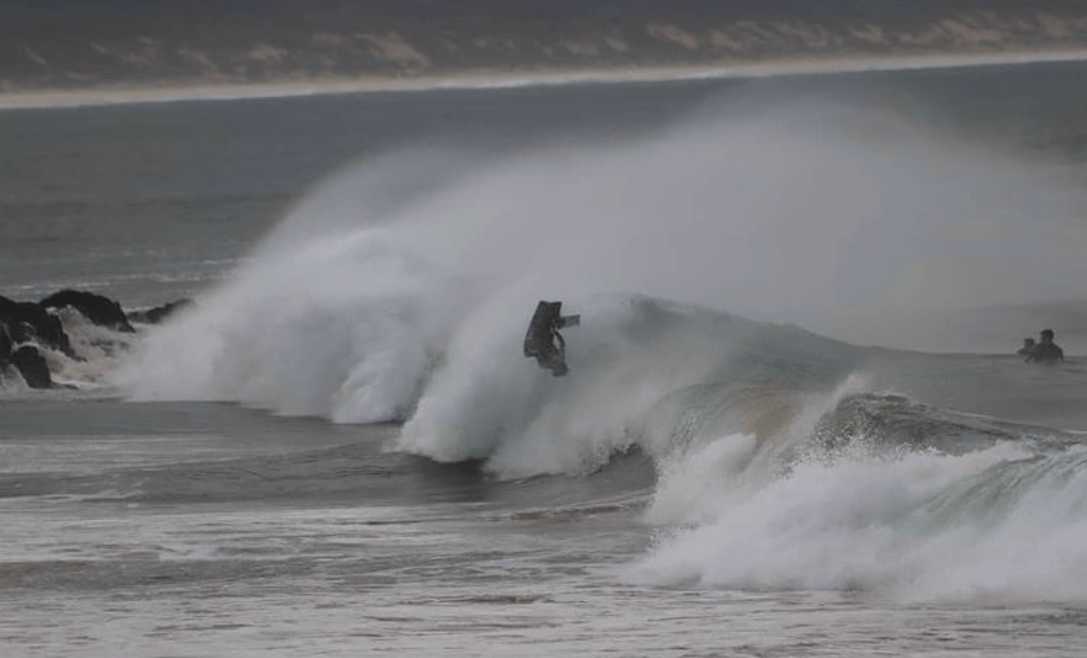
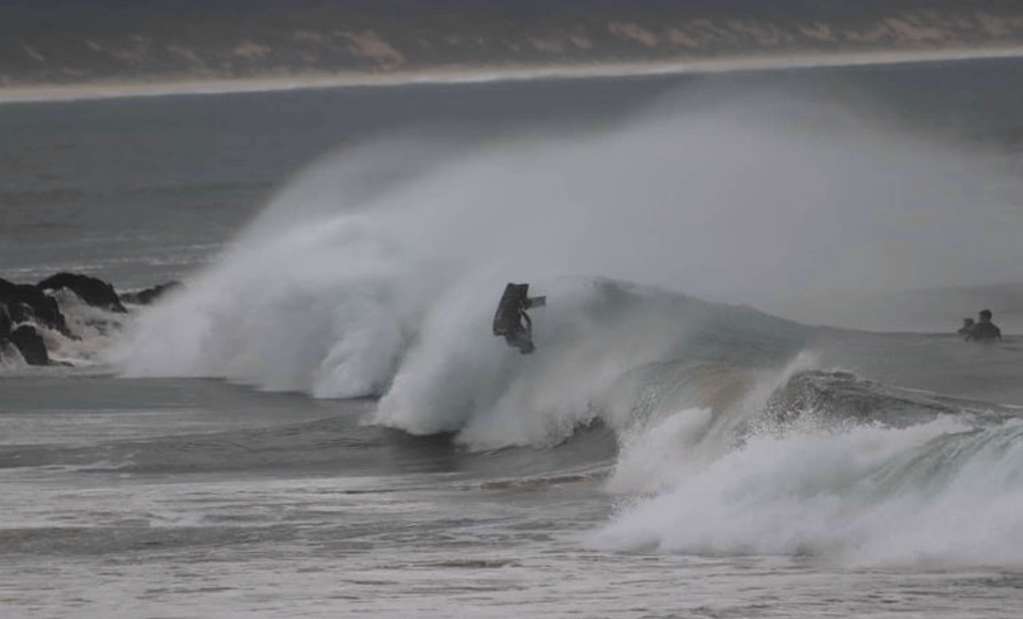
Us humans have a need to name things and place them in neat little groups with other things that share similarities. It’s part of how we communicate and make sense of the world around us. So when Bego Martinez and Fabio Aquino disagreed on whether competitors completed a backflip (Bego) or an A.R.S (Fabio) during the South American leg of the 2022 IBC world tour, it left viewers like us feeling a bit confused. Aquino had a point; it did look like the board rotated some as Tristan Roberts descended into the flats during his quarter final heat at the Antofagasta Bodyboard Festival. But Bego seemed so confident in calling it a backflip. Was she right? I wanted to know so I reached out to 2017 world champ Iain Campbell to help us be more like Bego.
Why do you think it’s so difficult sometimes to tell an A.R.S from a backflip?
Backflips and ARS’s are very similar. They have the same flow and movements due to you rotating through a circular movement in the air. To put it simply, the ARS is a rotation around the hand while the backflip is a rotation over the head. When we look at them side by side there are some distinct differences…
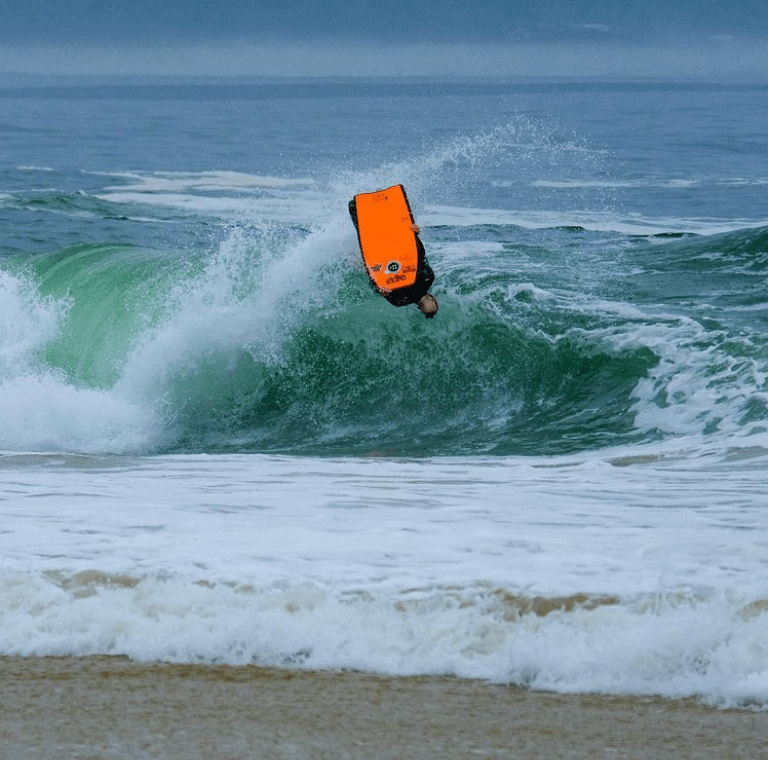
The backflip is a rotation around the head, straight back off the lip of the wave. Once your body has left the wave, there is a lot of similarities to the roll when you start to go upside down. Once you are upside down, you are throwing your head directly backward to start the rotation over your head, straight back. This rotation is down completely with the head as you fall back over your own body. With the backflip you are almost always landing backwards on the wave as the rotation does not allow you to spin yourself at the end until you have hit the water and place your leg or distributed your weight to start the rotation.
By definition, the ARS or Air Roll Spin is the combination of those three moves. Get into the air, perform a roll and then into a spin. This looks different as the drive of the ARS is through the front hand pulling the board over as if you were doing a roll. Once the roll is 75% done, your front hand is then pulled towards the face of the wave causing the rider to start to perform the spin at the end of their rotation. This is why the ARS is mostly landed with the rider facing the beach or starting to spin as they hit the water surface. In the ARS you are not rotating over your head but around your front hand.
There is a bit of rotation in the outward projection at the beginning of the backflip. Could the angle of a backflip make it look similar to an A.R.S? Could the angle the spectators are viewing it from have a similar effect?
I feel like there is a bit of a hybrid version of the move that has been adopted on the world tour. Landing ARS’s is a lot safer than landing backflips due to the possibilities of an easy spin around at the end of the ARS compared to riding backwards on the backflip. Therefore alot of guys start with the backflip and once upside down pull the hand in to land flatter. This is definitely causing some confusion in the move.
When it comes to the roll rotation, in the backflip it is only similar until you are upside down, that is where the difference comes in. I don’t think a change in spectator angle can change what the move is…
You mention in your YouTube video, ARS Explained, that the positioning of the head and the board are different when comparing these two maneuvers. Could those be the telltale signs we could use to differentiate these moves when watching them in competition?
Yes for sure. I think this is the biggest tell-tale sign of what the move is… Head movement when watching these moves tell you exactly what they are. Head straight back – backflip. Head looking over the shoulder would be an ARS.
Why is the backflip performed more often than an ARS in competition?
Personally I don’t think this is happening at the moment. As stated previously, the backflip is a harder move to land as you are landing it backward. When it comes to judging I don’t feel that every judge in the world is very critical at this. However, I did notice the judging getting very critical this year when it came to air moves and landing them. ARS is a safe option. The spin forces you to land mostly in the pocket and allows for safer landings especially when the waves get bigger!
Would an ARS with a full rotation before landing score higher than a backflip on a similar wave and section?
I personally feel that the ARS would be scored less as it is the safer out of the two moves…
Probably a question more appropriate for the judges than yourself, but do you feel as if a straight backflip is scored higher than a backflip with a bit of rotation in it? Assuming all other factors are equal.
No. I don’t think they are getting scored higher. Also there are other factors with the back flip because of how you’re landing on the water. It’s always a very flat landing and that is difficult to control…Technical riding is hard to see from a judging tower and I feel if the judges had replays and slow motion viewing they would be able to accurately judge but this is not the case with the current panel. I think the judges are amazing but they are lacking resources to do an even better job. Hope that makes sense.
Makes perfect sense. Current limitations and future goals. Do you watch these competitions during or after you compete in them? If so, did you agree more with Bego or Fabio?
I am not too sure on the heats in question but I do feel that the commentators, not just these two, need to have some good experience in the ocean on a bodyboard. Knowing the moves and how they are performed correctly in order to educate and help the people, audience and new fans coming into the sport, to really understand what the sport is about. You cannot expect anyone to have the knowledge of us riding in the sport for years but instead we have to educate them. Unfortunately for us it takes a lot to understand the complexity of what the
riders are doing today and this move is definitely one that needs greater understanding and knowledge. I might just make a video explaining just that…
Looking forward to it. Thank you very much Iain…
Bego Martinez and Fabio Aquino do have plenty of experience on a bodyboard. Bego does double duty as a commentator and competitor on the IBC world tour where she’s currently ranked twelfth in the world. Fabio Aquino is a Brazilian national champion of bodyboarding and competed on the world stage in the 1990’s against legends such as Mike Stewart and Guilherme Tamega among others. (Check out his Instagram @fabioaquinooficial, he still rips.) These two aren’t the first commentators to encounter the conundrum of the backflip. During the Itacoatiara Pro of the APB world tour in 2016, Alex Uranga performed a “flip” on his way to victory in the Final against Pierre Louis Costes. Manny Vargas and Dave Hubbard were calling the heat. Neither one of them were sure which maneuver Uranga had just pulled off, was that an A.R.S or was he going for a backflip? So they decided to ask him. To briefly paraphrase and roughly translate his reply in Spanish, “It was sort of a mixture of the two maneuvers, I had the speed and the section to go for the maneuver but in order to land it I had to rotate out.” Next time we can’t decide what to call it, we know exactly what to do. Just ask Iain Campbell.

 ShapeShifters